Wednesday, October 23, 2013

New notes on thermo dynamics and Cell Membrane/ Na+ K+ pump

Hello Class,

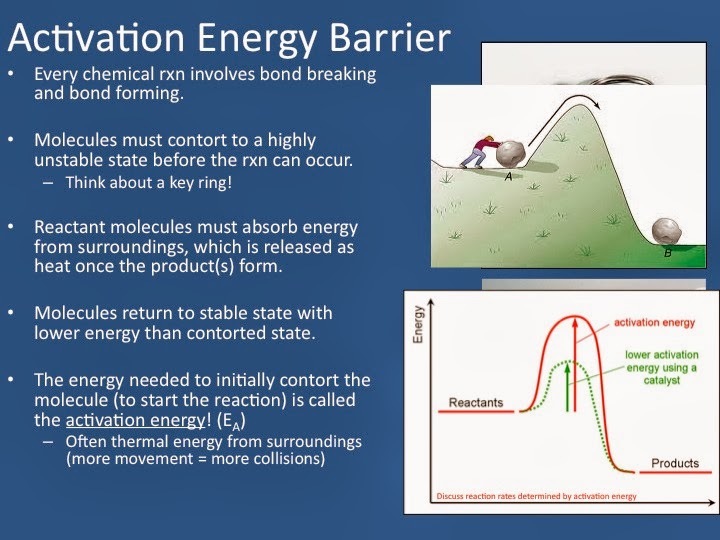
I will have the first tests back to you asap.  But before then let us dive into more thermodynamics notes as well as an excerpt on how cells can generate electrical currents (why did the fish store clerk wake up next to Sparky the electric catfish). 

Please note lab reports were due on the 17th.  We will soon be performing another lab in the same vein as the previous one: exploring diffusion and osmosis and how they relate to biological systems. See the notes below:

Tuesday, October 15, 2013

Diffusion and Osmosis

Hello Class,

I only have a few announcements to make so this post should be short and sweet:

The unit test will cover all material since the last test (chemistry to diffusion and osmosis) and will be held next Monday, Oct 21 for the Mummichogs and Tuesday, Oct 22 for the Killifish.

The first part of Lab-1 is due this Thursday October 17.

And lastly I am posting a Khan Academy video for further explanation of diffusion and osmosis:


Remember my Skype ID is VW181MAN if you want tutoring, but be sure to call my cell first to set up the appointment.

GOOD LUCK on PSATs tomorrow!

Tuesday, October 8, 2013

The Building Blocks of Life: Macromolecules

Hello Bio Students,

We managed to get most of you on field trips just before the shutdown of our federal government, which means you have had a taste of real scientific fieldwork!  If you recall, our group learned about the importance of decomposers such as Bacteria, Fungi, Benthic Macroinvertibrates, and Cave Fauna, in various ecosystems and why decomposition is considered a key process.  But what is the end production of decomposition?  Are these newly composting compounds all being turned into the same substances?

Yes and No

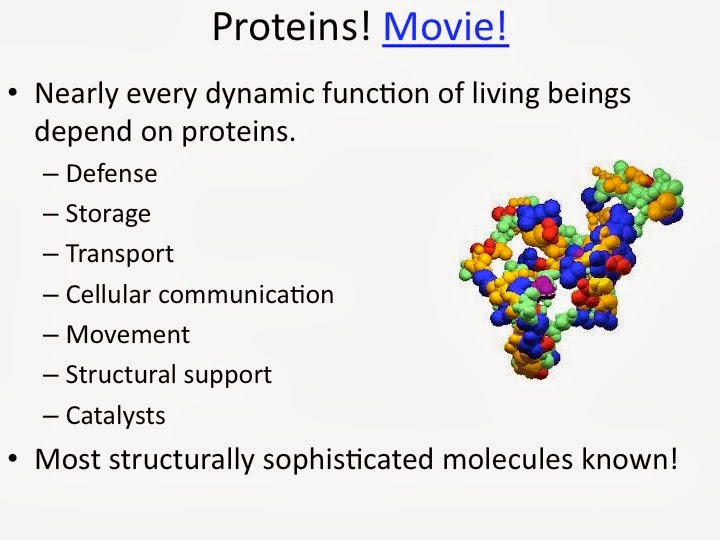
Sometimes decomposition breaks organic molecules all the way down into small inorganic molecules (we call this mineralization).  Another possibility is that organic molecules are broken down into smaller organic molecules.  Somewhere on that continuum of decomposition lies molecules whose size and structures are similar to the macromolecules we are discussing in class:  Proteins, Nucleic Acids, Carbohydrates, and Lipids.